Budapest–Brussels, 13 October 2026 – Eurochambres and the Hungarian Chamber of Commerce and Industry (MKIK) presented their joint study, entitled “The Impact of AI on European Productivity”, in Brussels yesterday. This marks the first time that the MKIK has directly contributed to the European chamber network’s knowledge base through its own research.
Technology Alone Does Not Deliver Results – What Matters Is What Lies Behind It
The research underpinning the study began almost a year ago. Its key findings show that artificial intelligence (AI) has a measurable positive impact on productivity and stimulates investment. However, these gains are driven by complementary investments and organisational improvements. AI delivers a genuine competitive advantage when companies invest not only in technological infrastructure but also in developing their workforce, structuring and making effective use of available data, and adapting their internal operations.
European Cooperation Led by Hungary
Eurochambres brings together chambers of commerce and industry from 38 countries, representing the interests of more than 20 million businesses through a network of 1,700 chambers across Europe. Small and medium-sized enterprises (SMEs) account for 93% of the businesses represented by the network.
Several European chambers contributed to the study, while the MKIK coordinated and led both the research process and the preparation of the publication, thereby making a substantive contribution to shaping the European policy debate.
Full House at the Brussels Launch Event
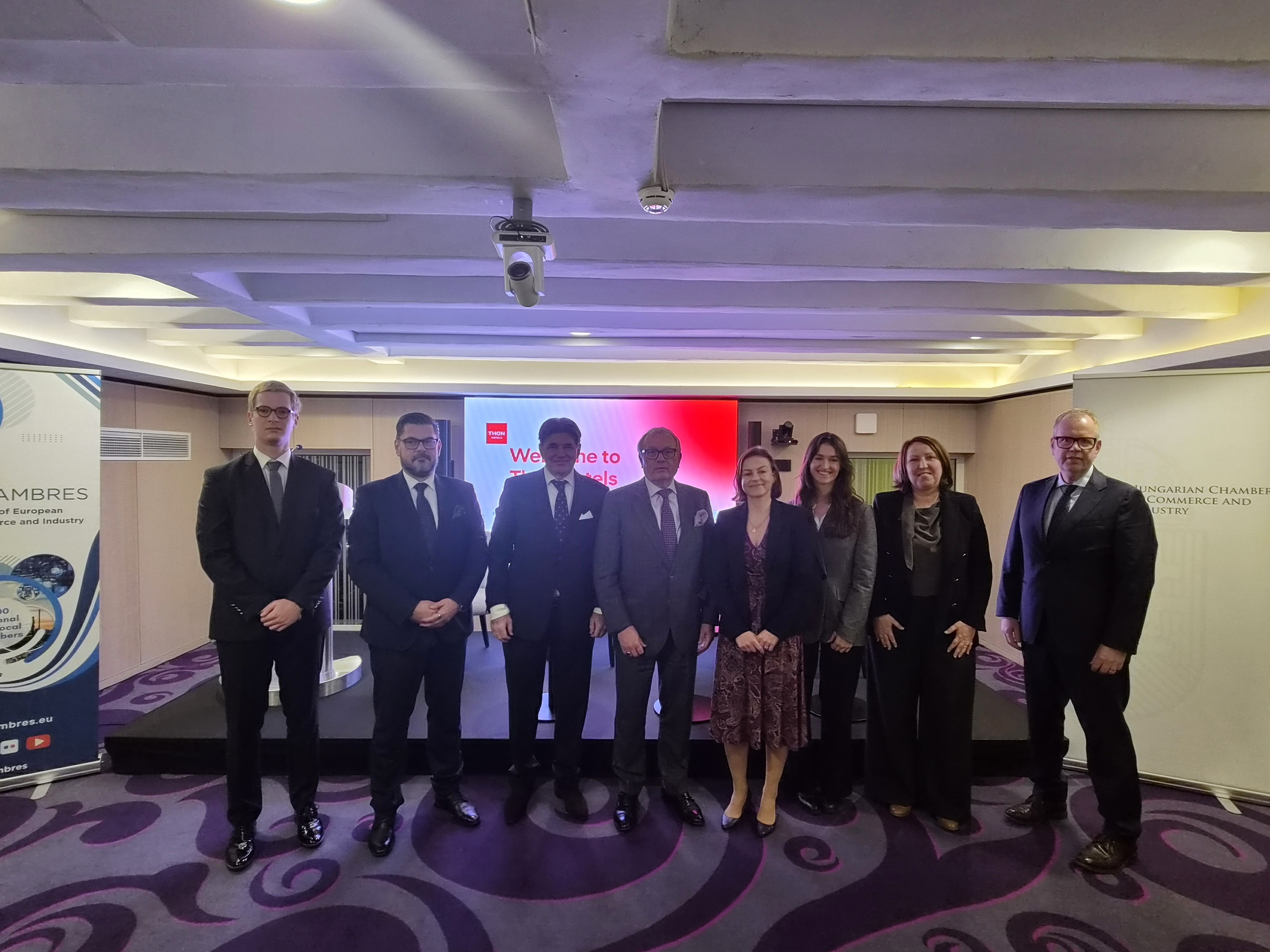
The study was presented at a fully attended event in Brussels, bringing together European chamber leaders, representatives of EU institutions and economic diplomats from EU Member States.
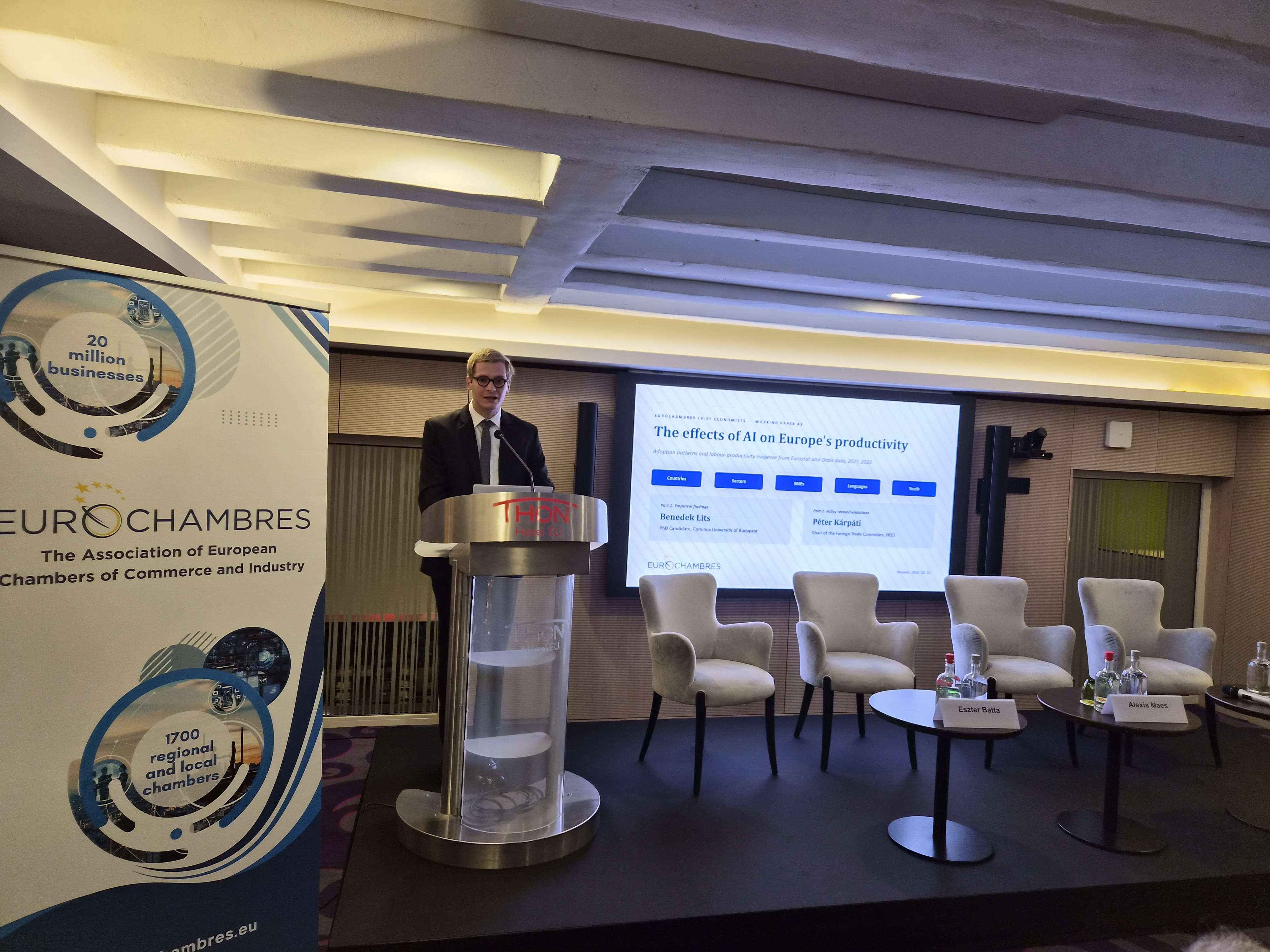
The event opened with welcoming remarks by Vladimir Dlouhý, President of Eurochambres. The study’s main findings were presented by Péter Kárpáti, Chairman of the MKIK’s Foreign Economic Relations Committee, and Benedek Lits, co-author of the study.
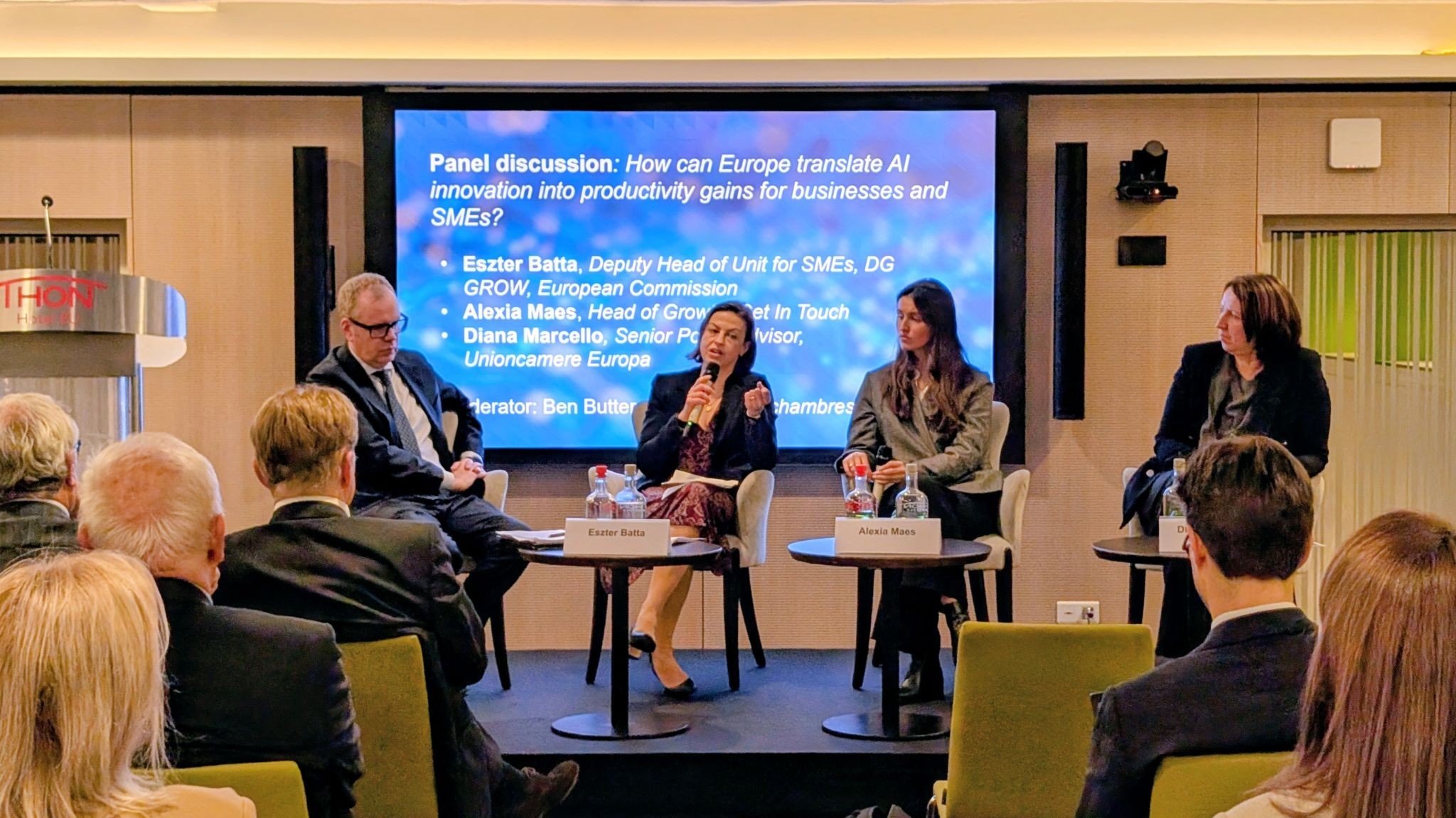
The presentations were followed by a panel discussion featuring Diana Marcello, Deputy Head of the Brussels Office of Unioncamere, the Italian Union of Chambers of Commerce; Eszter Batta, Deputy Head of Unit responsible for SMEs at the European Commission’s Directorate-General for Internal Market, Industry, Entrepreneurship and SMEs (DG GROW); and Alexia Maes, Head of Sales at the Belgian start-up Get In Touch. The discussion was moderated by Ben Butters, CEO of Eurochambres.
Significant Disparities Between Regions and Businesses of Different Sizes
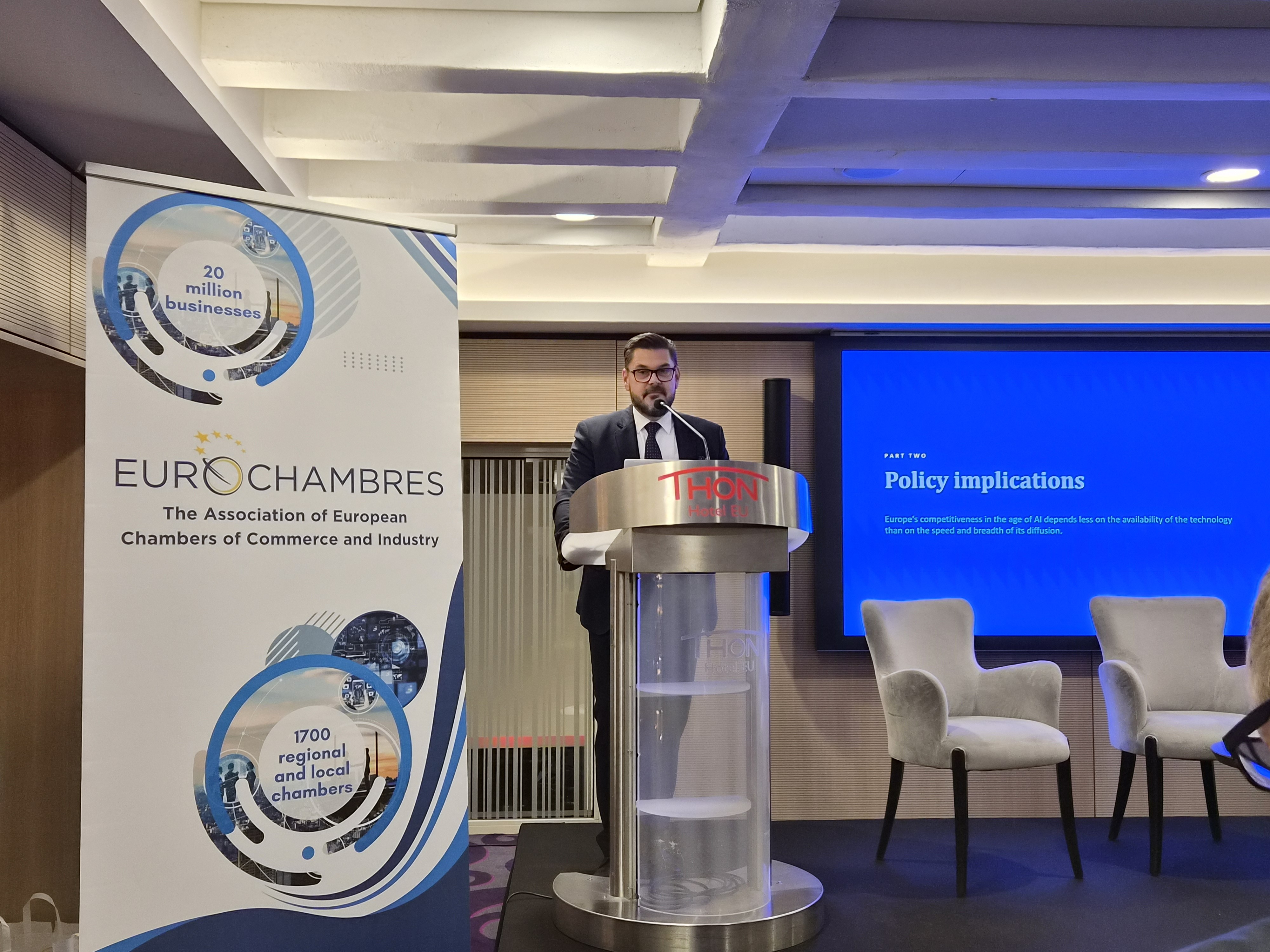
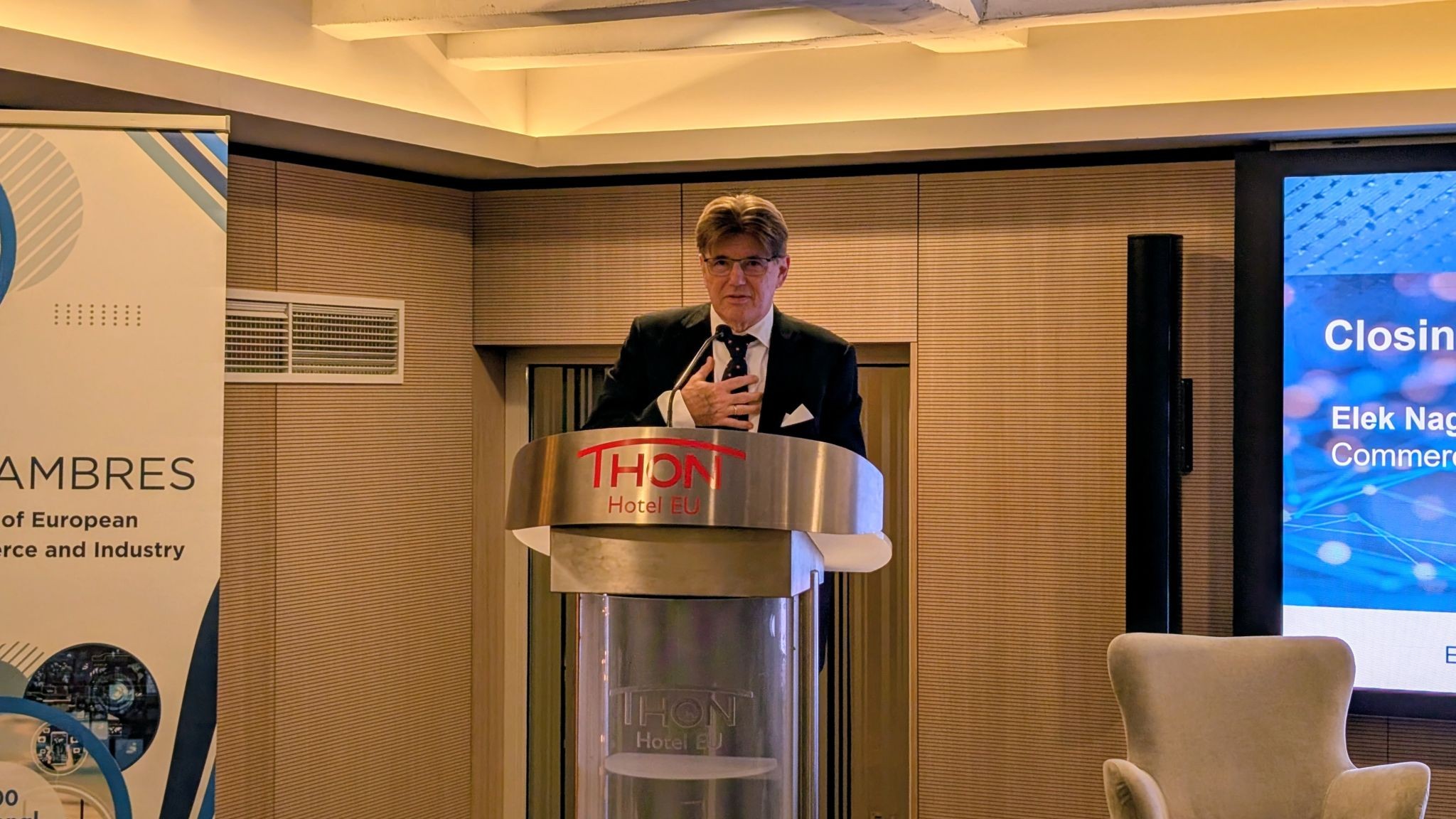
In his closing remarks, Elek Nagy, President of the MKIK, emphasised that while AI adoption is accelerating among European businesses, substantial regional disparities persist. Central and Eastern Europe, particularly its eastern and south-eastern regions, continues to lag behind, while large enterprises are significantly more likely to use AI than smaller businesses.
The MKIK President also put forward three concrete policy recommendations for decision-makers:
-
Practical, sector-specific guidance: The implementation of the EU AI Act must be accompanied by sector-specific guidance. For SMEs, regulatory uncertainty, rather than regulatory stringency itself, is often the main deterrent to investment.
-
Supported AI literacy and skills development: Without adequate support, the AI literacy requirements under Article 4 of the AI Act risk becoming an additional administrative burden for the smallest businesses. Funded training programmes, knowledge-sharing initiatives and ready-to-use solutions are essential. Chambers of commerce stand ready to play an active role in delivering these measures.
-
Ensuring adequate support for smaller European languages: Training data available in languages such as Hungarian, Lithuanian, Latvian and Estonian is considerably more limited than in English, potentially resulting in disparities in AI performance. This is also a productivity issue and therefore requires action at EU level to ensure that businesses across the Single Market have access to AI tools of comparable quality, regardless of language.
Helping Shape Europe’s Future
President Dlouhý highlighted that the Hungarian-led research provides valuable guidance for policymakers and businesses alike. In the age of AI, competitive advantage will not be determined simply by who acquires the technology, but by who can successfully adapt, develop and evolve alongside it.
The study not only demonstrates the quality and expertise of the Hungarian chamber’s research activities but also contributes to ensuring that smaller businesses and less-developed regions are better equipped to seize the opportunities offered by artificial intelligence.